
Researchers study GLOW components, like those in kylopeptides.com/product/glowusing five main types of models: cell cultures, 3D reconstructed skin, ex vivo tissue, animal models, and human studies. Each one answers a different question, and none of them answers every question. A dish of skin cells can show whether an ingredient is gentle or irritating. A human trial can show whether it changes how skin looks and feels over weeks. Knowing which model sits behind a claim tells you how much weight to give it.
That matters if you’re weighing a product, or any formulation that promises visible results. A bold claim backed only by a cell-culture test is a very different thing from one supported by people actually using the product. Below, we walk through each model in plain language, compare what they can and can’t show, and give you a simple checklist for reading claims critically. If a claim ever leaves you with unanswered questions, consumer advocates and mediation services can help you sort it out fairly.
What Are GLOW Components, and Why Do Research Models Matter?
GLOW components are the individual ingredients or active parts of a formulation that researchers study for their effect on skin and tissue. What counts as a GLOW component depends on the specific product, so the safest move is to check the ingredient list the manufacturer actually publishes rather than assuming.
Why bother with models at all? Testing every new ingredient directly on people isn’t practical or always safe. Researchers usually start with a single ingredient before testing the finished product, because it’s easier to see what that one part is doing. A full formulation mixes many things together, and any of them can change the result.
A few terms come up again and again, so here they are in plain language:
- Component
- One individual part of a formulation, such as a single ingredient studied on its own.
- Active ingredient
- The component meant to produce a specific effect on skin, as opposed to ingredients that mainly hold the product together.
- In vitro
- Tested in a lab dish or similar setup, outside any living body.
- Ex vivo
- Tested on real tissue that was taken from a person or animal and studied outside the body.
- In vivo
- Tested in a living person or animal.
- Model
- A stand-in for real skin or tissue, like cells in a dish or lab-grown skin, used to answer a particular question.
- Clinical study
- A study carried out on human volunteers under planned, controlled conditions.
Here’s the key idea to carry forward: every model answers a different question. A dish of cells can tell you one thing, lab-grown skin another, and a study on volunteers something else again. None of them tells the whole story alone, which is why knowing which model was used matters when you read a claim.
Lab-Based Skin Models: Testing Without Using a Living Person or Animal

Simple Cell Cultures: The First Step
Simple cell cultures are where most skin research begins. Scientists grow skin cells in a flat layer at the bottom of a small plastic dish, bathed in a liquid that feeds them. Two cell types are used most often: keratinocytes, which make up the outer layer of skin, and fibroblasts, which build the supportive structure underneath.
The big advantage is speed. Because these cultures are cheap and quick to set up, researchers can test many ingredients, at many concentrations, in a single experiment. They can see whether a GLOW component keeps cells healthy, whether it harms them at higher doses, or whether it changes how cells grow and behave. That makes flat cultures a handy first filter, helping teams decide which ingredients deserve more expensive testing later.
The trade-off is realism. Real skin isn’t a single flat sheet. It has layers, a protective outer barrier, and different cell types working together. In a dish, cells sit in direct contact with whatever is added, which doesn’t match how an ingredient meets skin in real life, where it has to travel through those layers first. Cells grown this way can also behave differently from cells in living tissue. If you want a visual explanation of the limits of 2D cultures this video is a good starting point.
So when you see a claim backed by “cell studies,” read it as an early signal, not a finished answer. It shows an ingredient did something to cells in a dish. It doesn’t show the same thing happens on your skin.
3D Reconstructed Human Skin: A Closer Look-Alike
Picture a tiny patch of skin grown in a lab dish, built layer by layer from human cells. That’s 3D reconstructed human skin. Researchers start with skin cells taken from donated tissue. They grow them on a supportive scaffold, then raise the culture to the air so the top layer toughens into a barrier, much like the outer surface of your own skin.
Why does that layered design matter? Real skin isn’t a flat sheet of cells. It has a protective outer barrier sitting on top of deeper layers that give it structure. A flat cell culture can’t copy that. A reconstructed model can, so it behaves more like the real thing when an ingredient lands on it.
Researchers use these models for two main questions. The first is absorption: does an ingredient stay on the surface, or does it move into the deeper layers, and how quickly? The second is irritation: does the tissue show signs of stress or damage after exposure? Because the sample is small and uniform, scientists can test several concentrations side by side and compare the results fairly.
These models are also increasingly used in place of animal testing. Skin built from human cells avoids the species differences that can make animal results hard to translate, and many labs and regulators now favour this approach where it’s suitable. The scientific literature has discussed human skin equivalents alternative methods for years, which shows how established the idea has become.
There are limits to keep in mind. The tissue has no blood supply, no immune response, and no hair follicles or sweat glands. So it’s a strong close-up of skin, not a full picture of what happens on a living person. When a claim cites this kind of model, it tells you something real about the ingredient, just not everything.
Ex Vivo Skin: Real Human Tissue Studied Outside the Body
Ex vivo skin is real human skin that has been donated, usually after cosmetic surgery, and then studied in a lab shortly afterward. “Ex vivo” simply means “outside the living body.” Because the tissue comes from a person, it keeps the natural layered structure that simpler lab models can only imitate.
Researchers often use it for short-term questions. A common one is how deeply an ingredient travels. They apply a test ingredient to the surface, wait a set period, then check which layers it reached and how much got through. That gives a more realistic picture of absorption than a dish of cells can.
The strength here is the structure. The outer barrier, the layers beneath it, and the natural makeup of the tissue are all still there, so results tend to reflect how real skin behaves at the surface.
There are limits, though. The tissue is no longer connected to a living body, so there is no blood flow, no active immune response, and no way to watch changes over days or weeks. It also can’t show how skin responds to repeated, long-term use.
Samples vary too. Age, body site, and skin condition differ from one donor to the next, so results can shift between samples. Researchers describe this as donor-to-donor ex vivo variability which is why a single small test shouldn’t be treated as the final word. Look for studies that use several donors and report the range of results, not just one clean number.
Animal Models: Where They Fit and Why Their Role Is Changing

For many years, animal models were a standard part of skin and tissue research. Rodents, rabbits, and guinea pigs were used to see how an ingredient might cause irritation, allergic reactions, or other changes in living tissue. Because an animal is a whole living system, researchers could watch how a substance moved through the body over time, something a dish of cells can’t show.
The catch is that animal skin isn’t human skin. Rodent skin, for example, is typically thinner, has many more hair follicles, and absorbs substances differently than ours does. Those differences limit what a result can tell you about how an ingredient will behave on a person.
Over time, the role of animal testing has been changing. Many regions have introduced rules that limit or restrict it, particularly for cosmetic ingredients, and researchers have developed non-animal options like 3D reconstructed skin and ex vivo tissue to fill the gap. Approaches and regulations differ from place to place, and some safety questions are still handled in different ways depending on the product and the jurisdiction.
As a consumer, you don’t need to take a side to read a claim carefully. What matters is transparency. Look for a clear statement about how something was tested: which model was used, whether it involved animals, cells, donated tissue, or people, and how the results were reported. A claim that explains its method is easier to trust than one that simply says “clinically proven” or “lab tested.”
Human Studies: The Closest Evidence to Real-World Use
Human studies are the closest researchers get to showing how an ingredient behaves on actual people living their daily lives. Cells in a dish and lab-grown skin can’t tell you how a product feels after a week of use, or whether someone with sensitive skin reacts badly. Volunteers can.
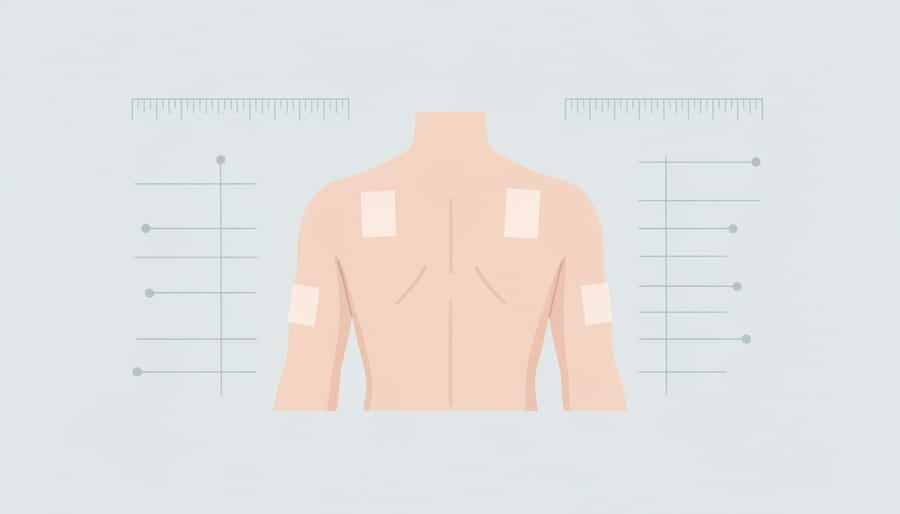
Most human studies fall into a few types. Patch testing is one of the simplest: a small amount of an ingredient or product is applied to a patch of skin, often on the back or forearm, and researchers watch for redness, itching, or other signs of irritation. It’s a safety check more than a performance test.
Then there are controlled before-and-after measurements. Volunteers use a product for a set period, and researchers take readings at the start and end, such as skin hydration, firmness, or visible changes in photographs. Instruments often do the measuring, which helps reduce guesswork.
The strongest designs also include a comparison. A placebo or vehicle group uses a product that looks the same but leaves out the ingredient being studied. Without that comparison, you can’t tell whether a change came from the ingredient or from simply moisturizing regularly.
So what makes a human study more trustworthy? Look for a reasonable number of participants, since a handful of people can’t represent everyone. A control group matters too, and so does independent review, meaning someone outside the company that paid for the work has checked the methods. Clear reporting counts as well: the length of the study, how results were measured, and what didn’t work should all be spelled out.
Weaker studies often have very few participants, no comparison group, or results that rely only on people’s own opinions. Vague summaries with no details are another warning sign. A study can still be useful when it has limits, as long as the claims don’t stretch beyond what it actually showed.
Comparing the Models at a Glance
Each testing method answers a different question, so it helps to see them side by side. The table below sums up what each one is, what it can show, and where it falls short.
| Model type | What it is | What it can tell you | What it can’t tell you | Closeness to real-world use |
|---|---|---|---|---|
| 2D cell culture | Skin cells grown in a flat layer in a dish | Quick signals about cell health and basic reactions to an ingredient | How layered skin behaves or how deeply an ingredient travels | Furthest from real use |
| 3D reconstructed skin | Lab-grown, layered tissue built from human cells | Irritation, absorption and surface effects in a skin-like structure | Long-term effects or responses from blood flow and the immune system | Moderate |
| Ex vivo skin | Donated human skin tested outside the body | How far an ingredient moves through real skin structure | Whole-body effects, and results can vary between donors | Moderate to close |
| Animal model | Testing on animal skin or tissue | General tissue responses within a living system | Exactly how human skin will react, since the two differ | Indirect |
| Human clinical study | Testing with volunteers under set conditions | Visible results and tolerance during real use | Every individual’s outcome, or effects beyond the study period | Closest to real use |
No single row tells the whole story. Early lab models are quick and efficient for screening, while human studies show what people may actually experience. When you read a claim, noticing which row it comes from tells you how much weight to give it.
How to Read a Research Claim Like a Savvy Consumer
A bold headline is a starting point, not proof. Before you trust a claim about a skin product, a few plain questions can tell you a lot.
What model was used? (Skip the bolding in your head; just ask the question.) Was the testing done on cells in a dish, on lab-grown skin, on donated tissue, or on real people? Each answers a different question, as the earlier sections explained. A claim like “improves skin” means one thing when it comes from a flat cell culture and something quite different when it comes from volunteers using the product over several weeks.
Ask whether the results were in a dish or on people. A promising result in cells is a reasonable early sign. It does not prove the same thing will happen on your face or hands. Look for wording that tells you where the testing happened, and be a little cautious when it’s missing.
Next, find out who ran the study. A manufacturer can run perfectly good research, but independent review adds confidence. Was the study checked by outside experts, or published somewhere that requires that kind of scrutiny? Reputable companies are usually happy to say so.
Then compare the claim to the evidence. Did the study test a single ingredient while the product advertises a full formula? Did it run for a few days while the claim talks about long-term results? Did it include a control group, so you can see what happened without the ingredient? A claim that stretches past what was actually tested deserves a second look.
None of this means companies are hiding something. Most people simply never get the details, and asking for them is fair.
If you’ve ever read a utility bill or compared energy offers, this will feel familiar. You wouldn’t choose a plan from a headline rate alone. You’d ask what’s included, check the fine print, and compare like with like. The same habit works here: ask for the details, line up similar claims side by side, and let the evidence, not the headline, guide your decision.
What Research Models Can’t Tell You
Every research model, however well designed, has limits, and knowing them helps you set realistic expectations.
Start with individual differences. Skin varies with age, genetics, hydration, climate and health conditions. A model built from a handful of donors or cell lines can’t capture that range, so a result that looks strong in a study may play out differently for you.
Next, there’s the gap between a single ingredient and the finished product. A component tested on its own may behave differently once it’s mixed with other ingredients, because the full formulation can change how deeply it penetrates, how stable it is, and whether it irritates. Studying one part doesn’t automatically describe the whole.
Time matters too. Most lab and short human studies run for days or weeks. They can’t always show what happens after months or years of regular use.
None of this means the research is useless. It means each model is a tool for answering a specific question. If you have a skin condition, a history of reactions, or lingering concerns, a pharmacist, doctor or dermatologist can give you advice that no study can.
It’s a bit like deciding on an energy plan. You wouldn’t judge it from a headline rate alone. You’d read your billcompare retailers and, if the numbers don’t add up, switch retailers based on your own situation.
Clear Information Is a Consumer Right: Where Alberta Energy Providers Can Help
Whether you’re sizing up a product claim or reading a utility contract, you deserve clear, honest information. The habits that help you question a study (ask how it was done, who ran it, and what the results really show) work just as well on a bill or an energy offer. If something isn’t explained plainly, you’re entitled to ask until it is.
That’s the idea behind Alberta Energy Providers. We represent small business, farm, and residential consumers in regulatory matters, so everyday customers have a voice when decisions about utility services are being made. We also publish educational resources on electricity, natural gas, and water services, written in plain language rather than industry jargon.
Sometimes information isn’t enough, and a problem with a utility company stays stuck. That’s where mediation comes in. If you’d like to see how mediation resolves disputes without the cost and stress of going to court, our guide walks through it step by step. It also helps to know the quality service rules your provider is expected to follow.
If you’re approaching the end of a term, our real-life mediation story on renewing a contract shows what to watch for. And for business owners, there’s practical advice on how to protect yourself when regulatory decisions affect your costs.
Frequently Asked Questions About Skin and Tissue Research Models
Questions about how skin and tissue studies work come up often, so here are short answers to the ones readers ask most.
Is lab-grown skin the same as real skin?
Not quite. Lab-grown skin is built from human cells and has layers that behave a lot like real skin, but it lacks things like blood flow, hair follicles, and the immune response of a living person. That makes it useful for testing, but not a perfect stand-in.
Does a study in cells prove a product works?
No. A cell study shows how an ingredient affects cells in a dish, which is a helpful first clue. It can’t tell you what happens on actual skin, so look for human studies before treating a claim as proven.
Why do some studies test only an ingredient and not the full product?
Researchers often isolate a single ingredient to see exactly what it does without other variables getting in the way. The catch is that an ingredient can behave differently once it’s blended into a finished formula, so ask whether the final product was tested too.
What does it mean when a study is called independent?
It usually means the work was run or reviewed by people who don’t have a financial stake in the result, such as a university or third-party lab. Good studies state who paid for the work and who carried it out, so check for that disclosure.
As for where to find a study’s details, start with the manufacturer’s website or product page, which should name the research or link to it. If it doesn’t, searching the study’s title or authors in a public research database is a reasonable next step. If a company makes a bold claim but won’t share how it was tested, that silence is worth noting, much like a utility that can’t explain a charge on your bill.
No single research model tells the whole story. Cell cultures offer a quick first look, 3D reconstructed skin shows how an ingredient behaves in layered tissue, ex vivo skin reveals how it moves through real human structure, and human studies come closest to everyday use. Each one answers a different question, and the strongest evidence comes when several types point the same way.
So the next time a product makes a bold claim, ask the simple question: how was this tested? Was it in a dish, on donated tissue, or on real people? Was there a control group, and did someone independent review it? Those few questions can quickly separate solid evidence from a catchy headline.
The same habit serves you well far beyond skin care. Whether you’re weighing a product claim or reading an energy contract, you deserve clear answers and fair outcomes. Alberta Energy Providers is here to help you get both with your electricity, natural gas, and water services.